The short answer
Truck finance in Australia is a business loan or lease used to buy a prime mover, rigid truck, tipper, trailer or specialised body, with the vehicle itself usually taken as security. Lenders weigh the truck's age, type and resale market alongside the operator's experience, contracts and bank statements. New operators can qualify, but a deposit, industry history or extra security often makes the difference.
On this page · 10 sections
- How does truck finance work in Australia?
- What do lenders look at on the truck itself?
- Can you get truck finance for a new business?
- What documents do you need for a truck loan?
- How do balloons and deposits change the deal?
- Why are lenders cautious with transport operators right now?
- When does a property-secured loan make more sense than truck finance?
- Illustrative example: an owner-driver’s first prime mover
- How to get truck finance: step by step
- Ready to get your truck on the road?
Key points
- The truck is normally the security, so its age, condition and resale market shape the deal as much as your financials.
- Chattel mortgage is the most common structure for operators who want to own the vehicle from day one.
- New operators can get truck finance, but driving history, a contract or a deposit usually carries the application.
- Older, private-sale or highly specialised vehicles may suit a property-secured loan better than asset finance.
Key facts
- Security
- Usually the truck or trailer, registered on the PPSR
- Common structures
- Chattel mortgage, finance lease, hire purchase
- Key documents
- Tax invoice or sale contract, ABN, bank statements, licence, contracts
- Suits
- Owner-drivers, fleet operators, tradies and civil contractors
- Speed
- Can be quick on a standard dealer truck when the file is complete
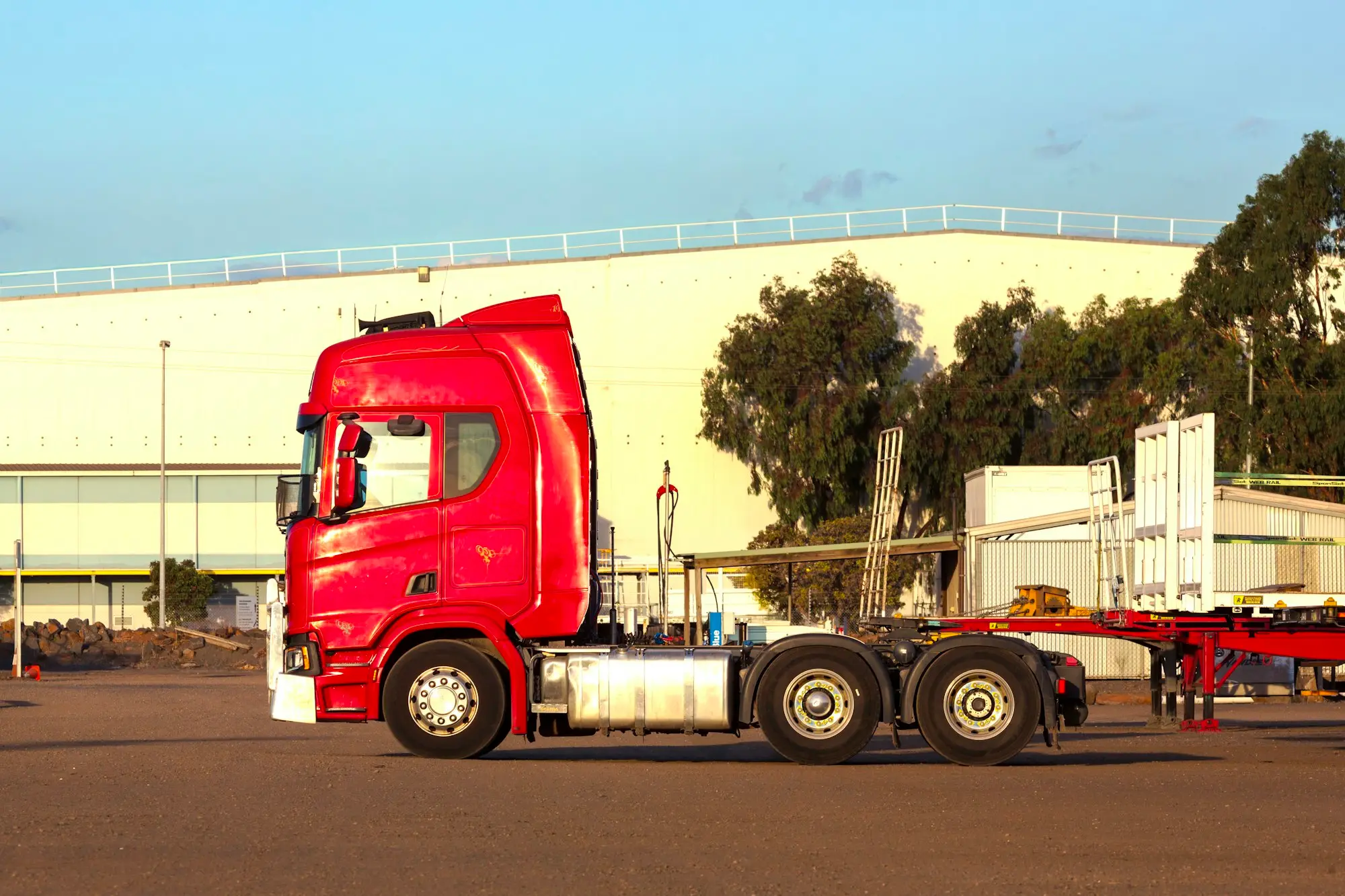
Truck finance is money borrowed, or a lease taken out, to put a commercial vehicle on the road: a prime mover, a rigid, a tipper, a refrigerated body, a tilt tray or the trailers behind them. In most truck finance in Australia the vehicle itself is the security, which means the lender cares as much about the truck as it does about you. Get both halves of that picture right and the approval tends to follow.
This page sits inside our wider guide to business loans in Australia and focuses on the questions operators actually ask before they sign for a truck.
How does truck finance work in Australia?
Truck finance works by the lender paying the seller and then holding an interest in the vehicle until you’ve repaid what’s owed. You make regular repayments over an agreed term, sometimes with a lump sum (a balloon) at the end. The lender registers its interest on the Personal Property Securities Register so the truck can’t be sold out from under it.
Four structures cover most deals:
| Structure | Who owns the truck | How it’s paid | Usually suits |
|---|---|---|---|
| Chattel mortgage | You, from settlement | Loan repayments, optional balloon | Operators who want ownership and to claim depreciation |
| Finance lease | The financier during the term | Lease rentals, residual at the end | Businesses that prefer rental-style payments |
| Hire purchase | The financier until the last payment | Instalments, ownership passes at the end | Buyers who want a clear path to ownership |
| Property-secured business loan | You, outright | Loan secured by real estate | Old, private-sale or unusual vehicles; buying several assets at once |
For most owner-drivers and small fleets, the chattel mortgage is the default because the business owns the truck from day one. Leases appeal to operators who replace vehicles on a fixed cycle. Our broader page on equipment finance compares these structures across all kinds of machinery.
What do lenders look at on the truck itself?
The vehicle is half the credit decision, so expect questions about:
- Age at the end of the term. Lenders want the truck to finish the loan at an age they can still sell it. An older vehicle usually means a shorter term.
- Type and resale market. A common prime mover or curtainsider has a deep second-hand market. A one-off specialised body is harder to resell, so lenders lend less against it.
- Seller. Dealer sales come with a tax invoice and clean title. Private sales need proof of ownership, a PPSR search and sometimes an inspection.
- Kilometres, hours and condition. High-use vehicles can still be financed, but expect a closer look and possibly a valuation.
- Imports and modifications. Grey imports or heavily modified units narrow the field of willing lenders.
Can you get truck finance for a new business?
Yes, truck finance for a new business is available, but lenders shift their attention from the business’s history to yours. Someone who has driven for a freight company for years and is stepping out as a subcontractor with a signed agreement is a very different risk from someone buying a first truck with no work lined up.
What helps a new operator:
- Industry experience you can show, such as employment history, licence class held for a while and references.
- A contract or subcontract that names the work, the rates and the duration.
- A deposit or trade-in, which reduces what the lender is relying on the truck to recover.
- Clean credit for the directors or owners.
- Property in your name, which can either back the deal or simply reassure the lender.
Our page on business loans for new businesses explains how lenders treat a fresh ABN more broadly. If the business is a start-up with no trading at all, the startup business loans guide is the better starting point.
Wondering whether your experience and contract would get over the line? Check where you stand before you commit to a truck — asking won’t leave a mark on your credit file.
What documents do you need for a truck loan?
| Item | Why the lender wants it |
|---|---|
| Driver’s licence and photo ID | Identity and licence class |
| ABN or ACN details | Confirms it’s a business-purpose loan |
| Recent business bank statements | Shows turnover, existing repayments and how the account is run |
| Tax invoice or contract of sale | Price, vehicle details and the seller |
| Freight contracts or subcontracts | Evidence the truck will earn its keep |
| Financials or tax returns (larger deals) | Profit and serviceability for bigger amounts |
| Asset and liability summary | Overall position, especially for guarantors |
Smaller deals for established operators can sometimes go through on bank statements and the invoice alone. Bigger amounts, multiple trucks or newer businesses usually need the full set. The document checklist builder will produce a printable list.
How do balloons and deposits change the deal?
A balloon payment shifts part of the principal to the end of the term, cutting your regular repayment. That can help cash flow in the early years of a new contract, but the lump sum still has to be paid. Set it at a level the truck will genuinely be worth when it falls due, otherwise selling it won’t clear the debt.
A deposit does the opposite: it reduces the amount borrowed and therefore the repayment, and it gives the lender a buffer. For newer operators and older vehicles, a deposit can be the difference between a yes and a no.
Why are lenders cautious with transport operators right now?
Transport is under the lending microscope. The RBA’s October 2026 Financial Stability Review notes that company insolvencies remain elevated in some industries, particularly hospitality, construction and transport, with wage and input costs squeezing smaller operators. At the same time the ABS reports transport, postal and warehousing business numbers grew in 2025–26, so there’s more competition for freight.
In practice, lenders want to see that repayments sit comfortably inside your cash flow even in a slow month. Clean bank statements, no dishonours and a clear picture of your fuel, tyres, insurance and maintenance costs all help. Our transport industry guide covers how freight businesses typically structure their finance.
When does a property-secured loan make more sense than truck finance?
Asset finance is the natural fit for most trucks, but a loan secured by real estate is worth weighing when:
- the truck is old, rare or being bought privately and asset lenders won’t lend enough against it;
- you’re buying several assets at once, such as a truck, trailer and workshop gear, and want one facility;
- you need working capital alongside the vehicle, for fuel and wages while the first invoices are paid;
- credit history rules out mainstream asset financiers.
Property-secured business loans through our network range from $20,000 to $5,000,000 against residential or commercial property. See secured business loans for how that works.
Illustrative example: an owner-driver’s first prime mover
Illustrative only, with round numbers and no real business. A driver with eight years behind the wheel for a freight company is offered a two-year subcontract hauling containers. She finds a five-year-old prime mover at a dealer for $180,000 and has $20,000 saved.
- Her new ABN has no trading history, so the lender leans on her driving history, the subcontract and her clean credit.
- She puts the $20,000 in as a deposit, leaving $160,000 to finance on a chattel mortgage.
- She chooses a modest balloon so repayments sit well inside the contract income, and plans to refinance or trade the truck when it falls due.
Had the truck been fifteen years old and bought privately, the same lender may have offered a shorter term or declined, and a loan secured against her home could have been the cleaner route.
How to get truck finance: step by step
- Work out what the truck will earn and the repayment you can carry in a quiet month — the business loan calculator helps.
- Shortlist vehicles and gather their details before you put down a holding deposit.
- Collect ID, ABN details, bank statements, contracts and the seller’s paperwork.
- Decide on structure: chattel mortgage, lease or a property-secured loan.
- Compare the total cost in dollars, including fees and any balloon, not just the repayment.
- Settle, register the truck and keep the paperwork for your accountant.
Ready to get your truck on the road?
If you’ve found the truck, or you’re close, see if you qualify with a 60-second enquiry. There’s no credit check when you first ask, your details aren’t blasted out to every financier in the country, and an actual person looks at your situation and the vehicle together. Tell us the truck, the work it will do and your real numbers, and we can point you to the right lender on the first attempt.
How it works, step by step
- 1
Before you shop
Work out the job the truck must do, the contract or freight it will carry and the repayment your cash flow can comfortably handle.
- 2
Choosing the vehicle
Get the make, model, year, kilometres or hours, body type and seller details — lenders price risk around these.
- 3
Applying
Provide ID, ABN details, licence, recent bank statements, any work contracts and the tax invoice or sale contract.
- 4
Settlement
The lender pays the seller, registers its security interest and repayments begin on the agreed schedule.
Frequently asked questions
Can I get truck finance with a new ABN?
Yes, it's possible. Lenders look harder at the person behind a new ABN: years spent driving or running freight for someone else, a signed contract or subcontract, a deposit or trade-in, and a clean credit history. Owning property helps too. A first truck that is a standard, late-model unit from a dealer is far easier to fund than an old specialised vehicle.
Do I need a deposit for a truck loan?
Not always. Established operators with strong statements can sometimes finance the whole price. Newer businesses, older vehicles and private sales usually need some money in, either as cash or a trade-in. A deposit lowers the amount the lender relies on the truck to recover, which can widen the range of lenders willing to look at the deal.
Can I finance a used truck from a private seller?
Many asset financiers will, but they'll want extra checks: an independent inspection or valuation, proof the seller owns it, and a PPSR search showing no existing finance. Some limit private sales to stronger applicants. If the truck is old or unusual, a loan secured by property can be simpler than asset finance.
What is a balloon payment on truck finance?
A balloon is a lump sum left owing at the end of the term. It lowers the regular repayments because part of the principal is deferred. At the end you pay it out, refinance it or sell or trade the truck. Set it at a level the truck will realistically be worth by then, or you may owe more than it fetches.
How long can a truck loan run?
Terms commonly run from a few years up to around the expected working life of the vehicle. Lenders usually want the truck to finish the term at an age they're comfortable with, so an older truck often means a shorter term and higher repayments. Match the term to how long you'll realistically run it.
Is truck finance tax deductible?
Depending on the structure, the interest, lease payments and depreciation can be deductible for a business. The ATO's instant asset write-off is limited to assets costing under $20,000 for businesses with aggregated turnover under $10 million, so most trucks are depreciated over time instead. Your accountant should confirm the treatment before you sign.
Sources we checked
- RBA Financial Stability Review (October 2026) — Resilience of Australian households and businesses
- ATO — $20,000 instant asset write-off
- ABS — Counts of Australian Businesses, including Entries and Exits
- business.gov.au — Apply for a business loan
General information only, current at 5 October 2026. We don't publish interest rates: every business loan is priced on the borrower's own circumstances.