The short answer
Most business equipment and vehicles in Australia are funded by asset and equipment financiers, including bank asset finance arms, non-bank specialists and manufacturer or dealer financiers, using the asset as security. Banks suit established borrowers wanting everything under one roof. Online lenders can fund small, quick purchases unsecured. Property-backed loans suit packages of equipment that are hard to finance individually.
On this page · 13 sections
- Which lender types fund equipment?
- Why are asset financiers usually first choice?
- Which assets are easy to fund, and which are hard?
- What will a lender want to see?
- Lease, chattel mortgage or loan?
- What about tax time purchases?
- Why do equipment applications get declined?
- How do you get the best result?
- An illustrative example
- Quick checklist before you buy
- Matching the finance term to the asset’s life
- Equipment finance and your other facilities
- Ready to line up finance for your next machine or vehicle?
Key points
- Asset financiers are the natural home: the equipment secures the loan.
- Assets with a strong resale market are easiest to fund; specialised gear is harder.
- Dealer finance is convenient; compare it with an independent quote in total dollars.
- Small businesses may be able to use the $20,000 instant asset write-off — ask your accountant.
Key facts
- Main lender type
- Asset financiers
- Security
- The asset (PPSR)
- Alternatives
- Bank, online, property-backed
Buying a vehicle, a machine or a fit-out is one of the most common reasons Australian businesses borrow, and it’s one of the few where the lender type is usually obvious. The purchase itself can secure the loan. The questions are which kind of asset lender, and whether there’s a better route for your particular situation.
Which lender types fund equipment?
| Lender type | Best for | Watch for |
|---|---|---|
| Asset and equipment financiers | Most vehicles and machinery, new or used | Asset age and resale value limits |
| Manufacturer or dealer finance | Convenience at the point of sale, brand promotions | Compare with an independent quote |
| Major and regional banks | Established customers bundling equipment with other facilities | Full financials, slower process |
| Online lenders | Small, quick purchases without asset security | Higher cost, frequent repayments |
| Property-backed lenders | Specialised gear or multiple items financed together | Tying property to a depreciating asset |
Why are asset financiers usually first choice?
Because the equipment does a lot of the work. The financier registers its security interest on the Personal Property Securities Register, and if the loan isn’t repaid it can recover the asset. That lowers the lender’s risk and often means less paperwork, especially for common assets: utes, vans, trucks, trailers, excavators, tractors, forklifts and the like.
Which assets are easy to fund, and which are hard?
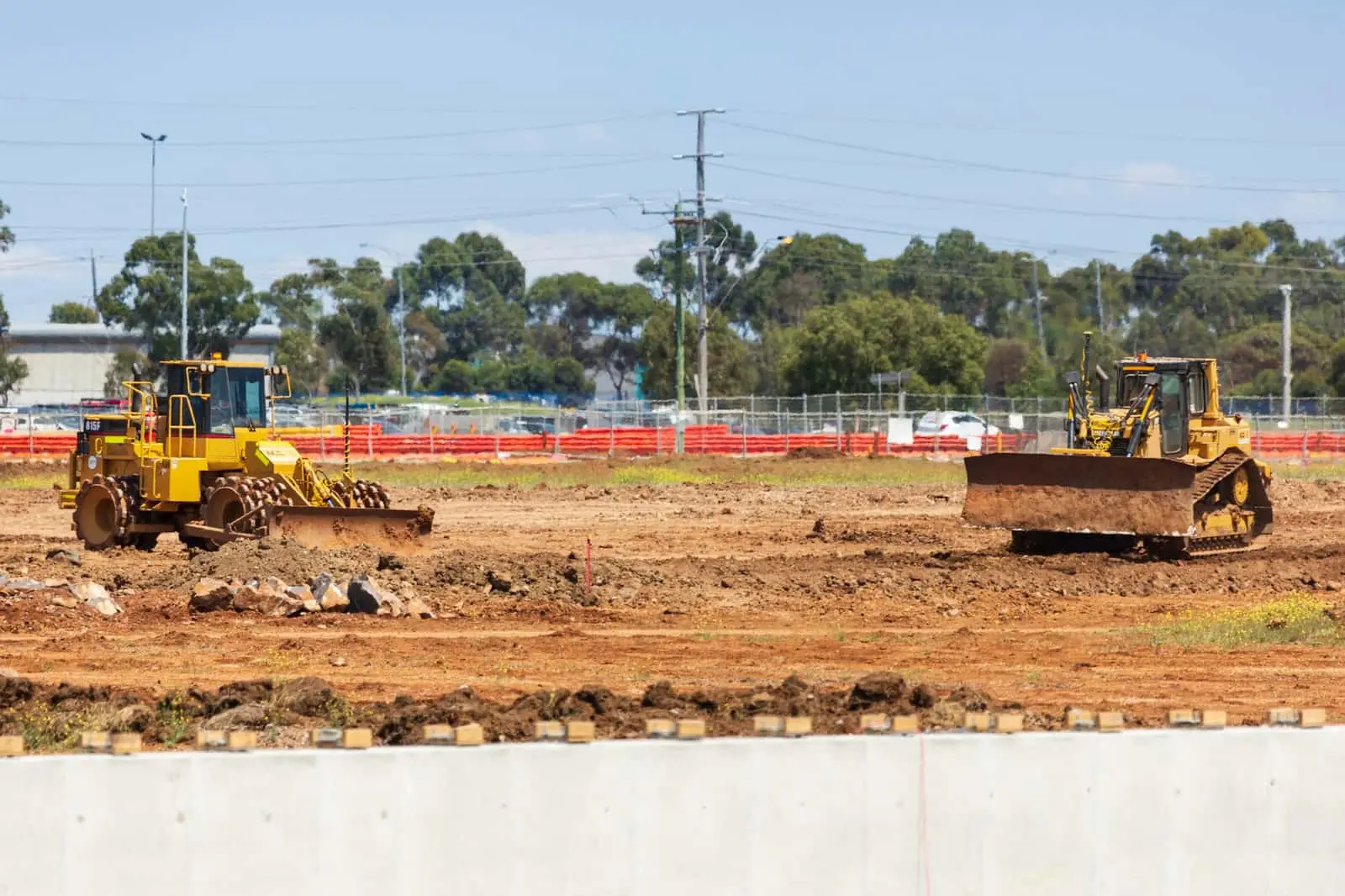
Easier: popular vehicles and trucks, mainstream earthmoving and agricultural machinery, standard commercial kitchen equipment, medical and dental equipment from established suppliers.
Harder: highly customised machinery, very old equipment, fit-outs that can’t be removed, software, and assets with little second-hand demand. For these, lenders may want a larger deposit, other security or full financials.
What will a lender want to see?
- A supplier quote or tax invoice (or a contract of sale for private purchases).
- ABN and GST registration details.
- ID for directors or the sole trader.
- For larger amounts: bank statements, BAS or financial statements.
- For private or auction purchases: a PPSR search, proof of ownership and sometimes an inspection.
Want to know if your purchase will fund on its own security? Ask a specialist before you sign the sales contract — it won’t touch your credit file.
Lease, chattel mortgage or loan?
business.gov.au frames the basic choice as leasing (renting from a company that owns the asset) or buying (owning it, with a loan if needed), and notes that GST credits and tax deductions may be available in either case for business use. Within buying, a chattel mortgage is the most common structure for vehicles and equipment. Your accountant is the right person to weigh the tax and GST side, while a lending specialist can tell you which structures your business can actually access.
What about tax time purchases?
The ATO’s simplified depreciation rules let small businesses with aggregated turnover under $10 million immediately deduct the business portion of eligible assets costing less than $20,000 each, and the ATO says the $20,000 threshold is permanent from 1 July 2026. Larger purchases are depreciated. Don’t let a tax deduction drive a purchase you don’t need; our guide to the instant asset write-off and financing the purchase explains how to think about it.
Why do equipment applications get declined?
- The asset is too old, too specialised or overpriced compared with its value.
- Recent credit defaults or court judgements.
- The business can’t show the cash flow to carry the repayments on a large purchase.
- A private sale with unclear ownership or an existing security interest.
How do you get the best result?
Pick the asset, get a written quote, and know your deposit or trade-in before you approach a lender. Compare dealer finance with an independent financier on total cost in dollars, not monthly repayment alone. Use the repayment comfort calculator to check the repayment against your cash flow, and consider the repayment frequency that matches how your business is paid.
An illustrative example
Purely illustrative, with no real business: a landscaping business needs a new tipper truck and a compact excavator. The truck is a popular model with a strong resale market, so an asset financier funds it on a chattel mortgage with a modest deposit. The excavator is second-hand from a private seller, so the financier asks for a PPSR search, proof of ownership and an inspection before approving. Both repayments are set monthly to match the business’s invoicing cycle. Funding each machine on its own security keeps the owner’s home out of the picture entirely.
Quick checklist before you buy
- A written quote, including any delivery, fit-out or registration costs.
- Your deposit or trade-in.
- The repayment frequency that suits your cash flow.
- A word with your accountant about structure and tax treatment.
- An independent finance quote to compare with dealer finance.
If you’re buying several assets over the next year, it’s worth asking a financier about a master facility or pre-approved limit. Rather than a full application for each purchase, you draw against an approved limit as you buy, which keeps paperwork down and lets you move quickly when the right machine comes up.
Matching the finance term to the asset’s life
The most common mistake with equipment finance isn’t the lender or the price; it’s the term. Finance a machine over longer than it will be useful and you’ll still be paying for it after it’s been replaced. Finance it over too short a term and the repayments crowd out working capital. A practical rule is to keep the term inside the period you expect to use the asset productively, and to think about what it will be worth at the end if there’s a balloon.
| Asset | Typical useful life in a business | Term owners often choose |
|---|---|---|
| Laptops, point-of-sale, small tech | Short | One to three years, or lease |
| Utes and light commercial vehicles | Medium | Three to five years |
| Trucks and trailers | Medium to long | Four to seven years |
| Earthmoving and heavy machinery | Long | Four to seven years |
| Fit-outs | Tied to the lease | No longer than the lease term |
These are common patterns rather than lender rules. Your own usage — hours, kilometres, how hard the gear works — matters more than a table. Ask your accountant how the term and any balloon interact with depreciation and the instant asset write-off before you settle on a structure.
Equipment finance and your other facilities
Funding equipment through an asset financier usually keeps your other borrowing capacity free. A bank overdraft or line of credit stays available for wages and stock, and property equity stays untouched for bigger needs. That separation is one reason most established businesses fund vehicles and machinery through dedicated equipment finance even when they could pay cash. Our guides to equipment finance, chattel mortgages and business car loans explain the structures, and you can line up finance before you buy with no credit check to ask.
Ready to line up finance for your next machine or vehicle?
Tell us what you’re buying, the price and a little about the business in a 60-second enquiry. A lending specialist will tell you which lender type fits and what to have ready. There’s no credit check to ask, your details aren’t sent to every financier going, and accurate answers mean we can structure it right first time.
Frequently asked questions
Who is the best lender for a work ute?
For most businesses, an asset financier — through a bank, a non-bank or the dealer — because the vehicle secures the loan. Compare at least one independent quote with dealer finance on total cost in dollars.
Can a new business get equipment finance?
Often, yes, particularly for common vehicles and machinery with good resale value. Some asset financiers accept newer ABNs with a deposit, industry experience or a clean personal credit history.
Can I finance equipment bought at auction or privately?
Many financiers will, with extra checks: an inspection or valuation, proof the seller owns it, and a PPSR search to confirm there's no existing security interest.
Should I use property to buy equipment?
Usually only when the equipment can't be financed on its own, or when you're bundling several purchases. Tying property to a depreciating asset for years is rarely the cheapest or simplest option.
Does financing equipment affect the instant asset write-off?
The ATO's rules focus on the asset's cost and when it's first used or installed ready for use, not on how it was paid for. Your accountant should confirm how a particular finance structure is treated for your business.
Sources we checked
- business.gov.au — Leasing or buying vehicles and equipment
- ATO — Instant asset write-off
- AFSA — Personal Property Securities Register
General information only, current at 5 October 2026. We don't publish interest rates: every business loan is priced on the borrower's own circumstances.